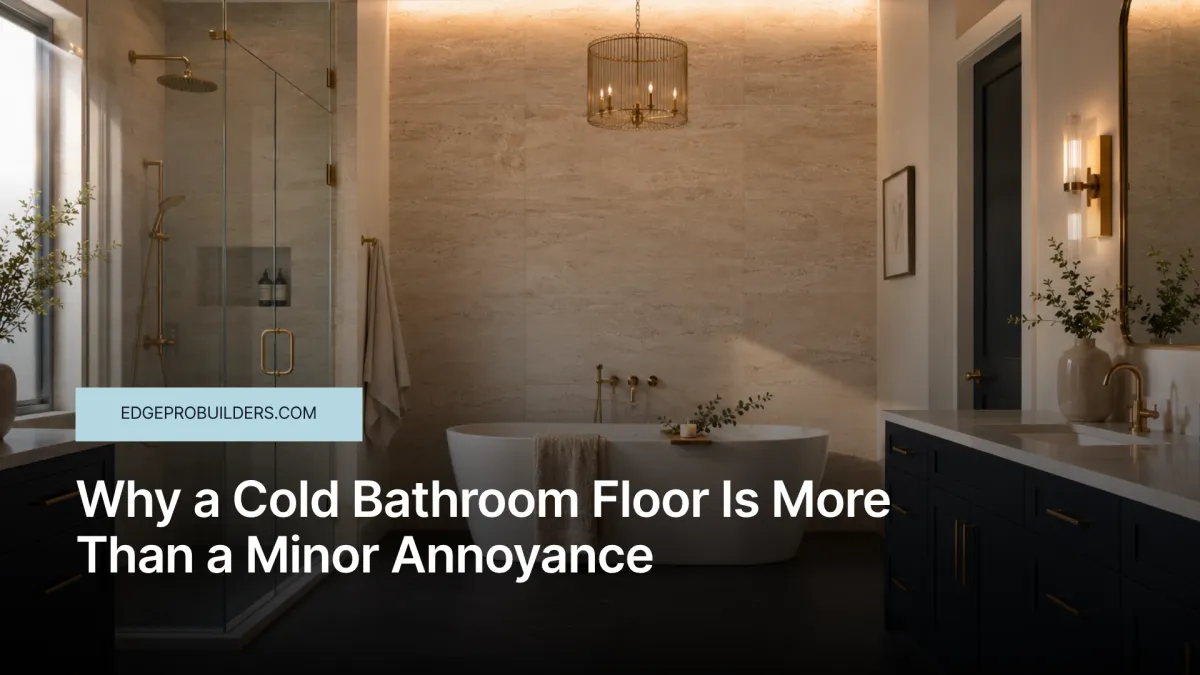
Heated Bathroom Floors Calgary | Edge Pro Builders
You probably already know the one. It's 6 a.m., still dark outside, and you step out of a warm shower onto a tile floor that feels like it's been sitting in a walk-in freezer overnight. You flinch. You reach for the mat. You do the mental math on how quickly you can get back to somewhere warm.
It's a small thing. But it happens every single day. And after enough mornings like that, it starts to feel like your bathroom is working against you rather than for you.
Heated bathroom floors solve this in the simplest way possible: you step out and the floor is warm. That's it. No waiting. No cold shock. No mat shuffle. Just warmth, right there underfoot, every time.
It sounds modest. But if you've ever stayed somewhere that had in-floor heating, you know it doesn't feel modest at all. It feels like the home is paying attention to you.
At Edge Pro Builders, we install radiant floor heating in ensuites and bathrooms across Calgary. Ryan Dumaresq has been on every one of those jobs personally, and the feedback from homeowners is almost always the same: they wish they'd done it sooner.
Why a Cold Bathroom Floor Is More Than a Minor Annoyance
There's a specific kind of frustration that comes from a bathroom that doesn't quite feel right. It's not a broken fixture or a leaking pipe, so it doesn't demand immediate action. It just sits there, quietly lowering the quality of your mornings, every single day.
Cold floors are the most common version of this. Especially in Calgary, where tile holds the cold for hours after the outdoor temperature drops, stepping into an unheated bathroom in January or February is genuinely unpleasant. You go in, you do what you need to do, you leave. There's no lingering. No moment of actually enjoying the space.
And the ensuite, especially, deserves better than that. You've likely invested in other parts of your home. A kitchen renovation that finally feels like yours. A basement development that the kids actually use. But the bathroom, the room you start and end every day in, still runs cold.
It's also worth saying this plainly: a cold floor affects how the whole room feels. Even a beautifully tiled ensuite with quality fixtures and good lighting can feel clinical and unwelcoming when the floor is cold. Warmth is part of what makes a space feel luxurious, not just how it looks. Feel matters as much as finish.
Why Calgary Homeowners Are Making This Upgrade Now
Calgary's climate makes this an easy case. We get real winters. Not the decorative kind that lasts a few weeks and then softens, but genuine, extended cold that sets in around October and doesn't fully release until April. During that stretch, your bathroom floor can stay uncomfortably cold for six months of the year.
The other thing driving this is a shift in how Calgary homeowners are thinking about renovation priorities. There's been a clear move away from cosmetic upgrades done for resale value toward functional improvements that make daily life genuinely better. Homeowners are spending more time in their homes than previous generations did, and that's changed what feels worth investing in.
In-floor heating systems sit right at that intersection. They add measurable value to a home if you do decide to sell, but more importantly, they improve how the home feels to live in every single day. That's the calculation most of our clients are making when they call us: not "what will this do for resale" but "why haven't we done this yet."
We're also seeing it come up consistently in our luxury ensuite renovations. When a homeowner is already investing in a full bathroom renovation, adding radiant floor heating is one of the highest-value additions per square foot available. The floor is already being pulled up. The tile is already being chosen. Adding in-floor heat at that stage costs significantly less than doing it as a standalone project later.
How Heated Bathroom Floors Actually Work
The Basics of Radiant Floor Heating
Heated bathroom floors work by running a heat source beneath the floor surface, warming the tile or stone from below. The heat radiates upward, warming the floor itself and the air closest to the ground, which is exactly where your bare feet are. Unlike forced air heating, which pushes warm air from above and lets it sink slowly, radiant heat under tile starts at the floor and works up. That's why a heated floor feels so noticeably different even when the room temperature is the same.
There are two types of systems used in residential applications: electric and hydronic. Understanding the difference matters because they suit different situations, and getting this choice wrong creates problems that are expensive to fix.
Electric Radiant Heat Flooring
Electric systems use heating cables or mats laid beneath the tile. They connect to your home's electrical system and are controlled by a dedicated thermostat. Electric radiant heat flooring is the more common choice for bathrooms, particularly ensuites, for a few practical reasons.
First, the installation footprint is smaller. Electric mats are relatively thin, which means they don't raise the floor height significantly and don't require major changes to the subfloor. Second, they're faster to install, which keeps labour costs lower. Third, for a single room application like a bathroom, the operating cost difference between electric and hydronic is minimal because the heated area is small and the system typically runs for a few hours in the morning, not all day.
Thermostat controlled floor heating is standard in electric systems now. Most smart thermostats let you program heating schedules by the hour and day of the week, so the floor is warm when you wake up and off for the rest of the day. Some connect to home automation systems. A well-programmed system costs very little to run because it's only working when you need it.
Hydronic Floor Heating
Hydronic systems circulate heated water through tubing beneath the floor. The water is heated by your home's boiler system. Hydronic floor heating is more efficient at scale, which is why it makes sense for whole-home applications or large-area installations like an open-plan main floor.
For a single bathroom, though, hydronic is usually overkill. The installation cost is significantly higher because it requires connection to a boiler system, and if your home doesn't already have one, that's a substantial additional investment. Response time is also slower than electric because the water needs time to heat up and circulate.
The honest answer is that most Calgary homeowners installing heated ensuite flooring choose electric, and for good reason. It's the right tool for the job.
The Best Flooring Materials to Pair with In-Floor Heating
Not every flooring material conducts and retains heat the same way. This matters because the floor material is doing part of the work: it absorbs heat from the system below and holds it so the surface stays warm.
Porcelain and ceramic tile are the best flooring for heated floors, and this is not really a close call. Tile conducts heat efficiently, holds warmth well, and is completely compatible with the temperature fluctuations that radiant systems create. Large-format tiles, which are very popular in luxury ensuites right now, are particularly good because fewer grout lines mean more tile surface absorbing and radiating heat.
Natural stone works well too. Marble, travertine, and slate all have good thermal properties. Stone also holds heat for longer after the system cycles off, which extends the warm feeling throughout the morning.
Engineered wood can work with radiant heat under tile when the system is properly calibrated to stay within safe temperature ranges. Solid hardwood is generally not recommended for bathroom applications regardless of heating, due to moisture. Luxury vinyl plank is compatible with some systems, though its thermal conductivity is lower than tile or stone, and it requires careful attention to manufacturer temperature limits.
If you're unsure which material is right for your renovation, this is exactly the kind of conversation we have during the design phase. Choosing the floor finish and the heating system together, rather than separately, is how you get a result that performs the way it should.
What to Expect During Installation: Process, Permits, and Timeline
One of the things homeowners tell us they appreciate most is knowing what's actually going to happen before it happens. So here's a straightforward walkthrough of how a heated bathroom floor installation works when Edge Pro Builders is running the project.
The first step is the design and planning conversation. Ryan walks the space with you, looks at the existing subfloor condition, discusses your thermostat preferences, and helps you choose the heating system and floor material that fits your situation. If this is part of a larger bathroom renovation, which it often is, this conversation happens alongside the broader project planning.
Permits are handled in-house. In Calgary, electrical work requires a permit and inspection, and the heating system is an electrical installation. We pull the permit, schedule the inspection, and handle that process without you needing to track it down yourself. This isn't optional, and any contractor suggesting you skip it is creating a problem for you down the line, particularly when it comes time to sell the home or make an insurance claim.
Once the existing floor is removed, the heating mats or cables are laid on top of the subfloor according to the manufacturer's layout specifications. There are coverage maps for every bathroom shape, and the installation needs to account for areas that will be covered by fixed cabinetry or the toilet base, where heat would be wasted. Getting this layout right matters for both efficiency and comfort.
The tile is then set on top of the heating mat using a modified thinset that's approved for use over radiant heat systems. The thermostat sensor, which reads floor temperature, is set into the floor during this phase and connected to the wall thermostat before grouting.
The floor goes through a cure period before the system is powered up. This is important. Running heat too early can damage the adhesive bond. Once cured, the system is tested, and Ryan walks you through the thermostat programming before he leaves the job.
Timeline for a standalone heated bathroom floor installation is typically two to five days depending on bathroom size and tile choice. As part of a full ensuite renovation, it folds into the broader project schedule without adding significant time.
Common Mistakes That Derail Heated Floor Installations
Using an Incompatible Flooring Material
The most common mistake we see in DIY or under-researched installations is pairing a radiant system with a floor material that isn't suited for it. Solid hardwood, for example, can warp and crack with the temperature cycling that heated floors create. Some vinyl products have temperature maximums that are lower than the output of the heating system. The result is flooring that looks fine initially and then starts to fail within a year or two. We specify the flooring and the heating system together so this doesn't happen.
Skipping the Permit and Inspection
This happens more than it should. A contractor does the installation without pulling an electrical permit, the homeowner saves a small amount of money upfront, and then years later when the home is being sold, a home inspector flags the unpermitted work. In Calgary, unpermitted electrical work can affect your ability to close a sale, your insurance coverage, and your liability if something goes wrong. We permit everything. Always.
Poor Sensor Placement
The thermostat for a heated floor relies on a floor temperature sensor buried in the tile bed. If that sensor is placed in the wrong location, the system either over-heats (expensive and potentially damaging) or under-heats (defeating the whole purpose). Sensor placement follows specific guidelines, and this step is not something to improvise. It's a small detail that has a big effect on how the system performs over years of daily use.
Treating It as an Afterthought
Homeowners who decide to add in-floor heat after the renovation is finished pay significantly more than those who include it during a bathroom renovation when the floor is already being replaced. If you're planning any bathroom renovation at all, the conversation about heated floors should happen at the start, not after the tile is already set.
Why Homeowners in Calgary Trust Edge Pro Builders with This Work
Ryan Dumaresq has been doing hands-on construction work for over sixteen years. He's not a contractor who shows up for the quote and then hands the job to a crew. He's on every project, doing the work or directly supervising it, every day.
Edge Pro Builders is fully licensed, bonded, and insured in Alberta, with WCB coverage on every job. For a project that involves both electrical work and a floor that you're walking on barefoot every morning, that's not a small thing.
The pricing model is transparent. You get a detailed quote before any work begins, and that quote doesn't shift with hidden charges partway through. If something changes in scope, that conversation happens openly before the work proceeds.
And the work is warranty-backed. Ryan stands behind what he builds because his name is on it and he's the one who built it. That's a different relationship than a large company where accountability is diffuse and phone calls go to a dispatch centre.
If you're curious how this approach carries through to other parts of the home, you can see it in how we handle kitchen renovations, bathroom renovations, and basement development projects across Calgary.
Precision is personal. That's not a tagline. It's just how Ryan works.
Ready to Stop Starting Your Mornings Cold?
If you've been thinking about heated bathroom floors for a while and haven't pulled the trigger yet, the honest reason is usually one of two things: uncertainty about cost, or uncertainty about the process. Both of those are worth a conversation.
Ryan talks to Calgary homeowners about this every week. Not a sales call. An actual conversation about your bathroom, your home, your budget, and what makes sense for your situation. Sometimes that conversation leads to a project. Sometimes it just clarifies your thinking and you go away better informed.
Either way, you walk away knowing more than you did.
If you're ready to talk, reach out at edgeprobuilders.ca/contact. Tell us about the space, what you're hoping to feel when you walk in there, and we'll take it from there.
"When your home works better, life works better too." — Edge Pro Builders
Frequently Asked Questions
Q: How much do heated bathroom floors actually cost to install in Calgary?
The honest answer is that it depends on the size of your bathroom and whether you're doing a full renovation or retrofitting into an existing floor. For most Calgary homeowners, a standard bathroom installation runs somewhere between $1,500 and $4,000 for the system itself, with costs rising for larger ensuite spaces or more complex tile layouts. What matters more than the number is understanding exactly what's included before any work starts. At Edge Pro Builders, pricing is transparent upfront because surprises on a renovation invoice are the last thing you need.
Q: Does radiant floor heating make sense in Calgary's climate, or is it just a nice-to-have?
Calgary winters are no joke. When it's minus twenty-five outside and your furnace is working overtime, stepping onto a cold tile floor in the morning isn't just uncomfortable, it's a daily reminder that your home still has one room that doesn't feel finished. Radiant floor heating runs on low, consistent warmth rather than blasting heat into the air, which means it pairs well with how Alberta homes already manage humidity and temperature in dry winter months. It's not a luxury addition for show. It's a fix for something that genuinely bothers you every single day from November through March.
Q: Will heated floors work under the tile I already have, or does everything need to come up?
In most cases, the existing floor does need to come up to install the heating element properly underneath. That's not a bad thing, especially if your tile is older or was never installed on a heated-ready substrate. Ryan and the team at Edge Pro Builders treat this as an opportunity to make sure the tile work underneath is done right the first time, with proper membrane, correct spacing, and a finish that lasts. Retrofitting over an existing floor without removing it is possible in some situations, but it often creates height inconsistencies at thresholds and doorways that cause problems later.
Q: How long does a heated bathroom floor installation take?
For a bathroom that's part of a larger renovation, the radiant system goes in during the natural sequence of the build, so it doesn't add significant time. A standalone heated floor project in an existing bathroom typically takes two to four days from demo to finished tile, depending on the size and complexity of the space. Curing time for the adhesive and grout means you'll want to plan for a few extra days before the system gets its first full test run. Ryan manages the schedule personally on every project, so you're not left guessing when you can use your bathroom again.
Q: Is heated tile flooring energy-efficient, or will it noticeably affect my electricity bill?
Most electric radiant systems are surprisingly efficient because they heat a low thermal mass, meaning the floor reaches temperature quickly and holds it without running constantly. Running a heated bathroom floor in Calgary for a couple of hours each morning typically adds somewhere between $10 and $30 to a monthly electricity bill, depending on the square footage and how often the system runs. You can also put it on a programmable thermostat so it's warm when you wake up and off by the time you leave for work. The cost per use ends up being small. The difference it makes to your morning is not.


